people

8 Reasons Parma’s Food System Is One of the Most Sophisticated Technology Stories in Europe

The word “artisanal” gets used in food marketing to signal the absence of technology: handmade, unautomated, resistant to industrial process. It is almost always misleading. The most sophisticated food production systems in the world are not the ones that have avoided technology but the ones that have integrated it so completely into a traditional framework that the technology becomes invisible. You see the product and call it artisanal. You look at the supply chain, the quality control systems, the climate monitoring infrastructure, and the institutional design behind the certification process, and you see something that a technology journalist would immediately recognise as a serious engineering achievement.

Parma, in the Emilia-Romagna region of northern Italy, is the clearest example of this in food production. The city that produces Parmigiano-Reggiano cheese and Prosciutto di Parma ham has built a food system around these two products that involves precision fermentation science, robotic quality testing, IoT-monitored aging environments, and a geographic authentication system that solves the same supply chain integrity problem that blockchain technology is currently being applied to across multiple industries. A food tour through Parma is also a tour through one of Europe’s most interesting applied technology stories.

Here are eight reasons it belongs on the tech journalist’s travel list.

1. The DOP Certification System Is a Pre-Digital Provenance Blockchain

The Denominazione di Origine Protetta designation for both Parmigiano-Reggiano and Prosciutto di Parma is a geographic authentication system enforced by consortium inspection at every stage of production. Every wheel of Parmigiano-Reggiano is marked at birth with a casein plate bearing a unique serial number, the date of production, and the dairy’s identification code. At twelve months, an inspector from the Consorzio del Formaggio Parmigiano-Reggiano physically examines every wheel in the facility using a small hammer to tap the rind and listen for inconsistencies in the interior structure. Wheels that pass are hot-iron branded with the consortium mark. Those that fail are stripped of their marks and sold without the DOP designation.

This is a physical implementation of the same provenance verification logic that blockchain engineers are currently applying to food supply chains: an immutable record attached to a physical object at the point of creation, verified by a trusted third party at defined checkpoints, and marked in a way that makes post-hoc fraud detectable. The Parmigiano-Reggiano consortium has been running this system since 1934. The technology is different from a distributed ledger. The architecture is the same.

2. The Aging Caves Are Precision Climate Control Environments

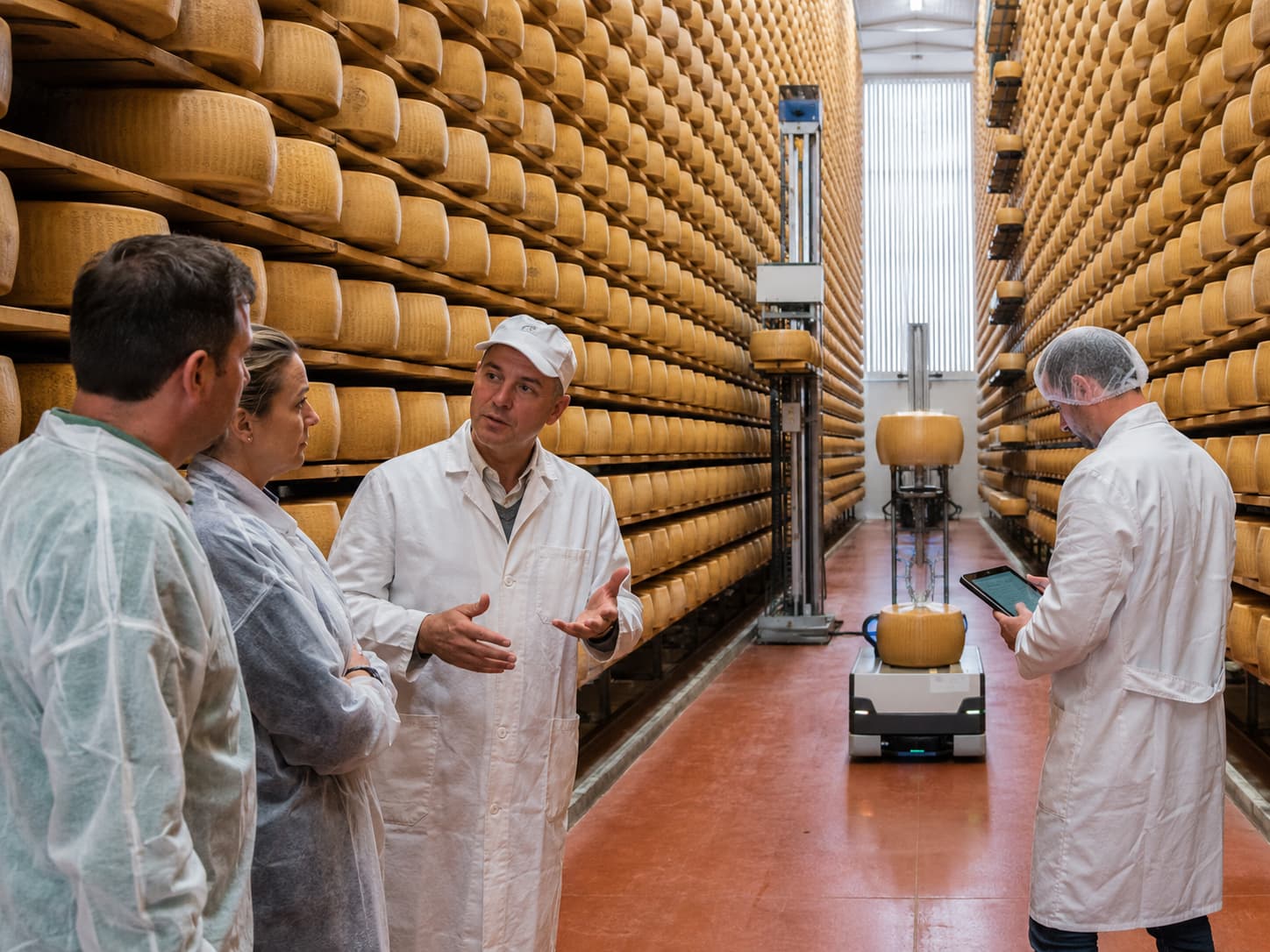
Parmigiano-Reggiano requires a minimum of twelve months of aging and is typically sold at twenty-four or thirty-six months. The aging environment is not a passive cellar. It is a controlled atmospheric system where humidity, temperature, and airflow are managed to produce the specific enzymatic activity that converts the young cheese’s texture and flavour profile into the crystalline, complex aged product. Modern Parmigiano-Reggiano facilities use sensor arrays to monitor conditions across thousands of wheels simultaneously, with automated alerts when any section of the aging room drifts outside the specified parameters.

The scale of this operation surprises most visitors. A single large facility may hold 100,000 wheels of cheese, each weighing around 40 kilograms, stacked on wooden shelving that extends to the ceiling of a warehouse-sized aging room. The environmental control required to maintain consistent conditions across that volume of product is not trivial engineering. It is the same kind of precision environmental management that pharmaceutical cold chain logistics require, applied to a food product that has been made in this valley since the Middle Ages.

3. The Prosciutto di Parma Salt Testing Robot Is an Industrial Engineering Story Worth Telling

The quality inspection of Prosciutto di Parma at the point of certification involves a specialist called a maestro salatore inserting a horse bone needle into five specific points of each ham and immediately smelling the needle after withdrawal. The olfactory assessment detects inconsistencies in the curing process that no instrument has yet matched for sensitivity and speed. The process is trained over years of apprenticeship and is considered the bottleneck in the consortium’s inspection capacity.

What is less widely reported is that the consortium has been working with food technology researchers to develop automated olfactory sensing systems that could supplement the maestro salatore’s capacity without replacing the human judgment that makes the assessment reliable. This is the same human-machine complementarity problem that appears in medical imaging AI, in materials inspection, and in any quality control domain where trained human sensory evaluation remains ahead of sensor technology. Parma is running a live version of this problem in one of the most unusual applications a tech journalist is likely to encounter.
4. The Milk Supply Chain for Parmigiano-Reggiano Is a Precision Agriculture Story

Every wheel of Parmigiano-Reggiano must be made from milk produced by cows within the defined production zone, fed on locally grown or produced feed under consortium-specified nutritional guidelines. The milk must be delivered to the dairy within two hours of milking. Each batch of cheese is produced from the evening milk of the previous day, partially skimmed by natural separation overnight, combined with the full-fat morning milk, and inoculated with whey starter culture from the previous day’s production in a closed-loop fermentation system that maintains the microbial continuity of each dairy’s unique culture.

This is precision agriculture and supply chain management operating at a level of specificity that most industrial food systems only approach through regulatory requirement. The traceability from individual cow to finished wheel, through a supply chain with sub-two-hour transit times and a fermentation process that is deliberately self-referential in its culture management, is the kind of system that food technology researchers study as a model for what sustainable, high-quality, geographically bounded production can look like at commercial scale. The technologies shaping the future of food production increasingly look like what Parma’s consorzio has been running for decades.

5. The Culatello Production Process Is Humidity Engineering in an Unusual Setting

Culatello di Zibello, a cured pork product from the Po river plain west of Parma, is produced in the fog-prone lowland environment of the river valley using the naturally high winter humidity of the area as a critical component of the curing process. The product cannot be made outside this specific microclimate, not because the recipe is secret but because the atmospheric conditions that produce the correct rate of moisture exchange through the casing during curing cannot be replicated elsewhere without energy-intensive climate simulation that would change the economics of production entirely.

This is geography as process parameter: a specific set of atmospheric conditions integrated into a production system in a way that makes them irreplaceable. It is the same principle that makes certain semiconductor fabrication processes location-specific, or that makes certain pharmaceutical fermentation processes sensitive to the mineral content of the local water supply. The terroir concept in wine and food is not mysticism. It is the acknowledgment that some process variables are geographically fixed and that the product they produce cannot be fully separated from the place that makes them available.

6. Guided Food Tours Navigate the Production System That Independent Visitors Miss

The Parmigiano-Reggiano dairies that accept visitors are typically small operations that have made a decision to open their production process to tourism as a secondary revenue stream. Finding them, booking access, and navigating the timing around the early morning production schedule (the cheese is made before most tourists are awake) requires local knowledge and advance coordination that most independent visitors don’t manage effectively.

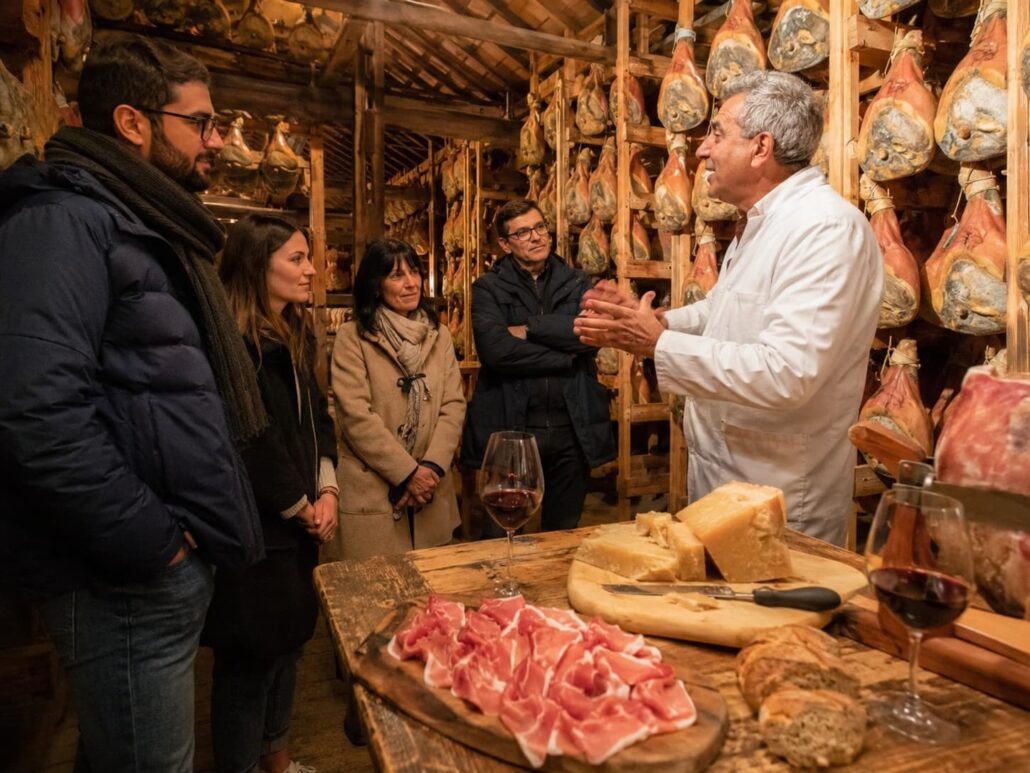
Operators like Parma Food Tours structure access to the full production chain: early morning dairy visits to see the cheesemaking process, aging facility tours with an experienced guide who can explain the quality control system, prosciutto production facility visits, and culatello cellars in the Po valley lowlands. For tech journalists and researchers whose interest in Parma extends to the production technology rather than just the product, this kind of structured access to the operational reality of the food system covers significantly more ground than independent restaurant visits alone.

7. The Consortium Governance Model Is an Institutional Design Case Study

Both the Consorzio del Formaggio Parmigiano-Reggiano and the Consorzio del Prosciutto di Parma are producer-owned organisations that set production standards, conduct quality inspections, manage the certification mark, and enforce the DOP designation through legal action against producers who violate the rules or retailers who misrepresent inferior products under the protected name. They are self-regulating industry bodies with enforcement authority delegated by the Italian state and backed by European Union intellectual property law.

The governance model that makes this work, producer ownership of the standards body, mandatory inspection at defined checkpoints, graduated sanctions for non-compliance, and international legal enforcement through the EU framework, is the kind of institutional design that technology policy researchers study when thinking about how to govern decentralised systems. The parallels to platform governance, to open-source project management, and to the emerging governance debates around AI development standards are not exact but they are instructive. As our coverage of technologies shaping the modern world notes, the governance problems that new technologies create are often older than the technologies themselves, and Parma’s consorzio model has been solving a version of the same problem for nearly a century.

8. Parma’s Food System Demonstrates What Geographic Locking Does to Product Quality

The argument for geographic indication protections in food, the legal framework that protects names like Parmigiano-Reggiano, Champagne, and Prosciutto di Parma, is fundamentally a quality argument rather than a commercial one. The claim is that the specific combination of geography, microclimate, biological culture, and accumulated production knowledge that exists in a particular place produces a product that cannot be replicated elsewhere, and that allowing the name to be applied to products made outside that context degrades the information value of the name to consumers.

This is an information systems argument. The name is a data compression: it encodes a specific set of production conditions and quality characteristics into a word that consumers can act on without needing to verify the underlying production chain themselves. Diluting the name by allowing inferior products to carry it is the food equivalent of a man-in-the-middle attack on a trusted certificate: the certificate remains valid in form while the underlying authentication has been compromised. Parma’s consorzio system exists to prevent exactly this attack, and it has been doing so with a combination of physical inspection, legal enforcement, and market reputation management that a cybersecurity engineer would find methodologically familiar. Understanding the system in person, by visiting the production facilities and the consortium inspection process, makes the information architecture behind it legible in a way that reading about it does not.

A Final Thought

The most interesting technology stories are often the ones where the technology is invisible because it has been fully integrated into a human practice that predates it. Parma’s food production system is exactly this: a set of techniques developed over centuries, progressively augmented by precision measurement, environmental control, robotic inspection, and institutional design, until the whole system runs at a quality and consistency that looks like tradition but is actually the result of continuous technological investment.

A food tour through Parma is not a break from the technology beat. It is a field visit to one of the most successful cases of technology integration in European manufacturing, wrapped in prosciutto and aged for thirty-six months.

The Parmigiano-Reggiano at the end of the aging facility tour tastes better than anything you will buy at home. That is also part of the story.


How Technology Is Changing Independent Book Publishing

Publishing once felt like a place with a locked front door. An author usually needed an agent, a publisher willing to take the bet, bookstore access, and a long stretch of waiting.

That version of publishing still exists, but it is no longer the only route in. Tech has opened side doors. Some are useful. Some are noisy. A few are easy to walk through and surprisingly hard to survive inside.

Independent publishing now means more than putting a manuscript online. It can involve digital storefronts, reader research, paid ads, freelance editors, AI tools, print-on-demand, and a fair amount of business sense. For authors and small publishers, the opportunity is bigger than before. So is the mess.

Traditional gatekeepers have less control than before

For years, large publishers controlled most of the journey. They decided what reached print, which authors got marketing support, and which books had a real chance of reaching stores.

They still matter. A lot. But they no longer decide everything.

Digital publishing gave authors a way to reach readers without asking for permission first. Research by Hviid, Izquierdo-Sanchez, and Jacques found that digitalization made self-publishing a serious option and lowered many of the old requirements around independent publishing. The same study connects this shift with a larger supply of books in the market. From Publishers to Self-Publishing: Disruptive Effects in the Book Industry

That changes the main question. It used to be, “Can I get someone to publish this?” Now it is closer to, “Can I make something readers want, and can I get it in front of them?”

Digital platforms cut the upfront risk

Ebooks, online marketplaces, and POD services changed the cost problem. A small publisher no longer has to print thousands of copies before knowing whether anyone wants the book.

That is a big deal. Printing in bulk meant paying for inventory, storing it somewhere, shipping it out, and dealing with boxes of unsold books if the launch went badly.

Now a book can live as a digital file until someone orders it. Then it gets printed. The work has not disappeared, but the financial gamble is smaller.

This is why more solo authors and niche publishers can enter the market. They do not need a warehouse. They do not need bookstore relationships on day one. A laptop, a budget, and a decent plan can be enough to start.

Indie publishers are acting more like online business owners

The old image of a publisher usually involved offices, editors, print contracts, and formal distribution. An independent publisher today might be one person working from a kitchen table with spreadsheets open and cover mockups scattered across five tabs.

Many are not just writing. They are researching topics, hiring freelancers, testing book ideas, managing design, formatting files, checking reviews, and running ads. Some love that part. Some clearly do not. Either way, it is now part of the job.

This is where independent publishing starts to feel less like a single creative project and more like a small digital business.

Someone building an Amazon publishing business, for example, is usually thinking beyond one book. The work may include niche research, positioning, cover testing, review strategy, ad spend, and the next title in the pipeline.

Creativity still matters. It just has to share the room with research and marketing.

Book ideas are chosen with more data now

Gut feeling used to carry a lot of weight in publishing. It still does. Personal experience and editorial taste can lead to strong books. But independent publishers now have more signals before they commit to a topic.

They can look at search demand. They can study categories. They can read negative reviews of similar books and spot what readers felt was missing. A bad review on someone else’s book can be weirdly useful. It tells you where the gap is.

That does not mean every book should be designed by spreadsheet. If the research becomes too mechanical, the result often feels thin. Still, data helps reduce blind guessing.

There is a catch. When publishing gets easier, more books appear. Hviid and colleagues point out that a larger book supply creates fresh problems around competition and quality signals. Readers have more choice, but they also have more junk to sort through. From Publishers to Self-Publishing: Disruptive Effects in the Book Industry

So research helps, but it does not carry the whole thing. A book still needs to feel trustworthy. It has to look professional enough that readers will give it a chance.

AI is changing the workflow, not removing the publisher

Can AI produce book text? Yes. That is the obvious part, and honestly not the most interesting one.

The more useful shift is in the workflow. AI can help with brainstorming, rough outlines, research summaries, draft cleanup, product descriptions, email copy, and repetitive admin work. It can speed up the parts of publishing that used to drain hours.

Automation can also help with formatting tasks, keyword tracking, ad organization, and project handoffs. For a small publisher, saving time on those jobs can matter a lot.

But AI does not remove responsibility. Someone still has to check accuracy. Someone has to make the voice sound human. Someone has to decide whether the book is actually useful. Copyright and originality concerns do not vanish because a tool made the draft faster.

A 2025 paper by Salani and Tapfuma describes AI as a force changing the publishing value chain, including content development, marketing, and distribution. The paper also raises concerns around integrity, copyright, and intellectual property. Artificial intelligence transforming the publishing industry

So, no, the future is not simply “AI replaces publishers.” The more realistic version is messier: publishers who use AI carefully may move faster, but they still need judgment.

Discovery is now tied to algorithms

Writing and publishing the book is only part of the work. Getting found is a separate battle.

Readers now discover books through marketplace search, recommendation engines, social feeds, email lists, search engines, and ads. That means metadata matters. So do keywords, categories, reviews, covers, descriptions, and early reader response.

It is not the romantic version of authorship. Nobody grows up dreaming about category optimization. But this is where many sales are won or lost.

A book that does not quickly show who it is for can disappear. There are too many other options one click away.

Social platforms have also changed how writers build an audience. Research on Wattpad by M. R. Bold shows how digital platforms let writers interact with readers and build communities outside traditional publishing structures.

That direct line to readers can be powerful. Authors can test ideas, understand complaints, and see what people actually care about before the next book is finished.

Lower barriers created a crowded market

Tech made publishing easier to enter. It did not make it easy to win.

More books means more competition. A basic upload is rarely enough now. Independent publishers have to think about editing, packaging, positioning, launch timing, and visibility.

This is where a lot of new publishers get surprised. The tools make the process look simple from the outside. Upload the file, choose the category, wait for sales. Then reality arrives.

A strong book needs a clear reader. It needs a title that makes sense. The cover has to fit the market. The description has to sell without sounding desperate. Reviews matter. Ads may matter too, especially in competitive niches.

The tools are available. They do not make the decisions for you.

The next phase belongs to publishers who can use tech well

Independent publishing will probably keep moving toward smaller, sharper publishing models. More niche presses. More AI-assisted workflows. More authors building an audience before release. More publishers using reader data before choosing the next project.

Print is not going away, though. Ebooks did not kill physical books. They became another format in the mix. A review discussing Kindle’s development notes that early predictions about ebooks replacing print have become more nuanced over time. Book Review: The Modem World: A Prehistory of Social Media

That is probably the quieter truth about publishing tech. It does not wipe out the old system in one dramatic sweep. It changes the rules. It gives more people a shot. Then it asks them to compete in a market that is faster and less forgiving than it looks.

Final thoughts

Technology has made independent publishing more open, but also more demanding. Authors and small publishers now have access to platforms, reader data, AI tools, freelancers, and marketing channels that were once harder to reach.

Still, the basics have not disappeared. Readers want useful books. They want quality. They want to feel that someone competent made the thing they just paid for.

The strongest independent publishers will probably be the ones who can write or commission good work, understand the market, and use tech without letting it flatten the book into something generic.

Smart Fabrics and Ergonomics: How Technology is Transforming Women’s Scrubs

Medical uniforms are undergoing significant changes thanks to new technologies and innovative materials. Today, women’s scrubs are not just work clothes, but high-tech equipment designed with comfort, safety, and the specifics of the work of medical workers in mind. Below, we will tell you how smart fabrics and ergonomic solutions are changing women’s medical uniforms and what benefits they provide.

Read More

Technologies shaping the future of the world

In the rapidly evolving landscape of modern society, technology plays an increasingly crucial role in shaping our lives. From communication to healthcare, transportation to education, technology’s influence is pervasive. This article delves into three pivotal areas of technological advancement that are driving significant changes globally: Artificial Intelligence, Renewable Energy, and Biotechnology.

Read More

Neon artificial people from Samsung

The NEON project (NEO – new, artificial and intelligent) is a Samsung research project that creates “artificial humans” using deep learning technology.

“Artificial humans” NEON are virtual assistants that can communicate with people, mimicking the emotions and behavior of real people. They are created using neural networks and deep learning algorithms that allow them to “learn” from large amounts of data, including audio and video.

Samsung says NEON can be used to create virtual assistants that can work in various fields, such as medicine, education, entertainment and technology. They can help improve people’s learning, entertainment and communication, as well as improve efficiency in various industries.

However, it is not yet clear exactly how NEON artificial humans will be used in the future. Samsung representatives state that they will not replace humans, but rather create new opportunities for communication and interaction.

Smart Cars

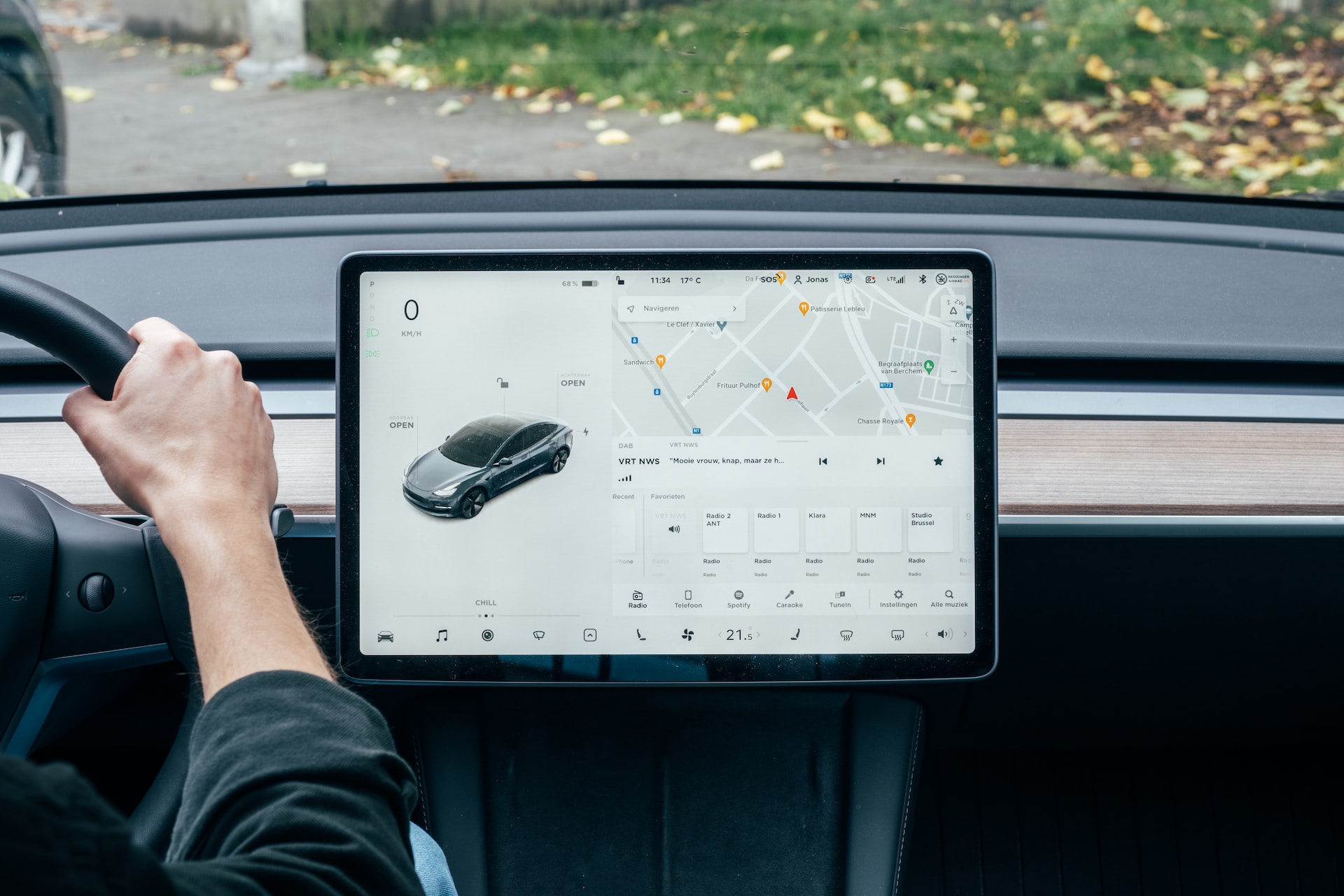
Unmanned vehicles are vehicles that can drive on roads without human intervention. They are used to make it easier and faster to transport people and goods, as well as to improve safety on the roads. The technology of unmanned vehicles develops every year and today it is a combination of various systems and devices.

The most important system in an unmanned car is the artificial intelligence system, which uses machine learning and neural networks to process data from various sensors. It allows the car to determine its location, recognize other vehicles and objects on the road, and make decisions about maneuvers.

One of the most important elements of unmanned car technology is sensors. Cameras, radar, lidar, and other devices are installed on vehicles to gather information about the road and the environment. Cameras allow the vehicle to see and recognize objects, radars determine the distance to them, and lidars create a 3D map of the environment.

To communicate with the outside world, unmanned cars use GPS, radio communication systems and the Internet. They can also be equipped with remote control systems that allow the operator to control the vehicle remotely if necessary.

In addition, unmanned cars are usually equipped with safety systems, such as automatic brakes and speed control systems, which allow them to avoid accidents.

In general, the technology of unmanned cars is still under active development, and it may change in the future. However, today it is already making it possible to create cars that can move without human intervention and still provide a safe

Drones

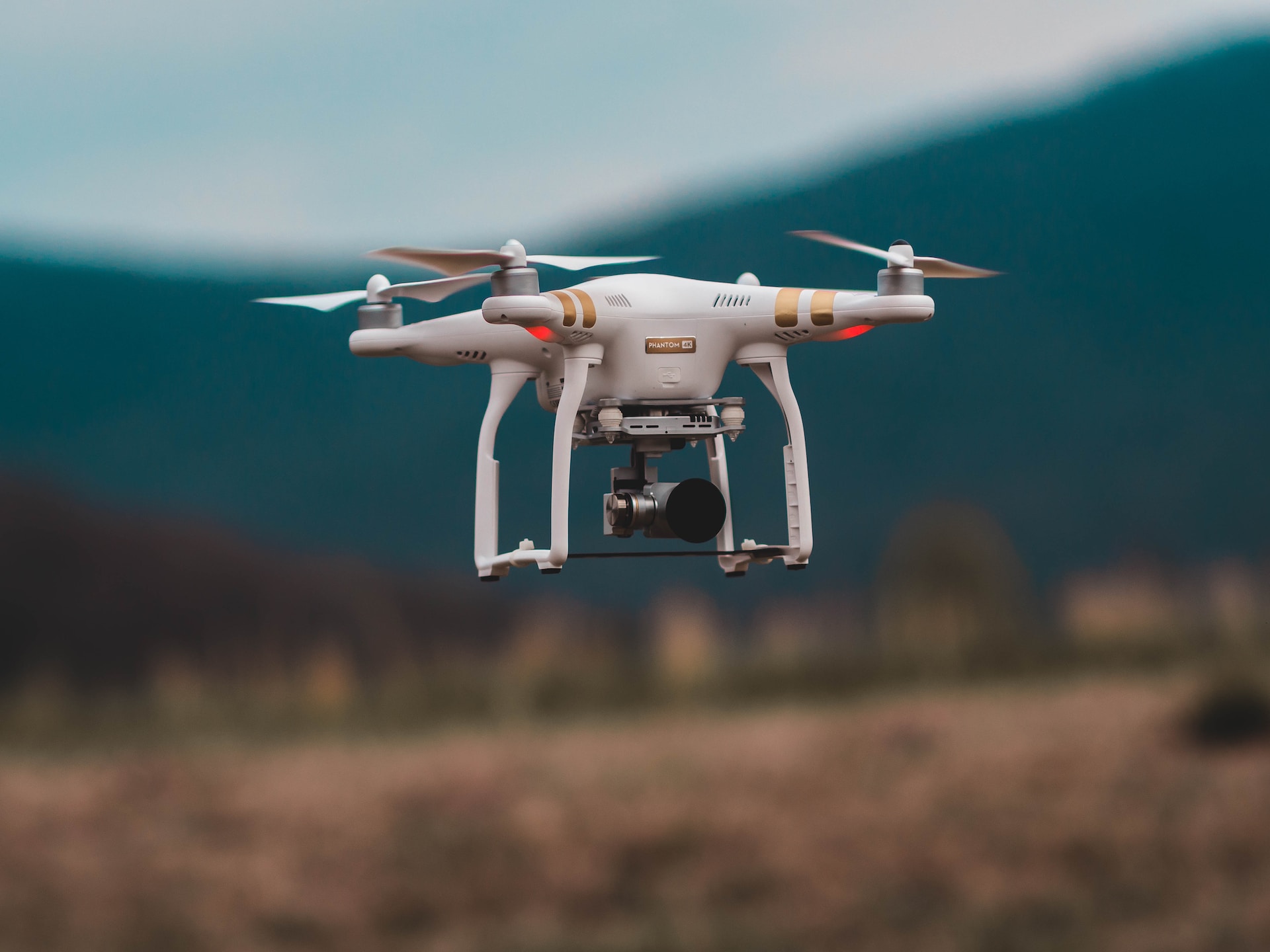
Drones are unmanned aerial vehicles that have become increasingly popular in recent years. They have many applications, from reconnaissance and surveillance to the delivery of goods and packages. However, like any new technology, drones have both positive and negative reactions.

On the one hand, drones have many useful applications. For example, they can be used to monitor the environment, especially in hard-to-reach places. They can also be used as life-saving tools, such as searching for missing people or delivering medical supplies to remote areas.

In addition, drones can be used for commercial purposes, such as delivering goods and parcels. This can be especially useful in cases where fast and efficient delivery is needed, especially in urban environments where traffic congestion can delay conventional deliveries.

However, there are also negative aspects to the use of drones. For example, they can pose threats to security and privacy, especially in cases where they are used improperly. Drones can be used for espionage, theft, or violating people’s privacy. In addition, drones can pose a threat to aviation, especially if they enter airspace in an unauthorized manner.

There are many laws and regulations that govern the use of drones. Some countries prohibit the use of drones altogether, while others restrict their use in certain areas or under certain conditions. In either case, it is important that drone users understand and comply with all relevant rules and regulations.

Robots and will they replace humans?

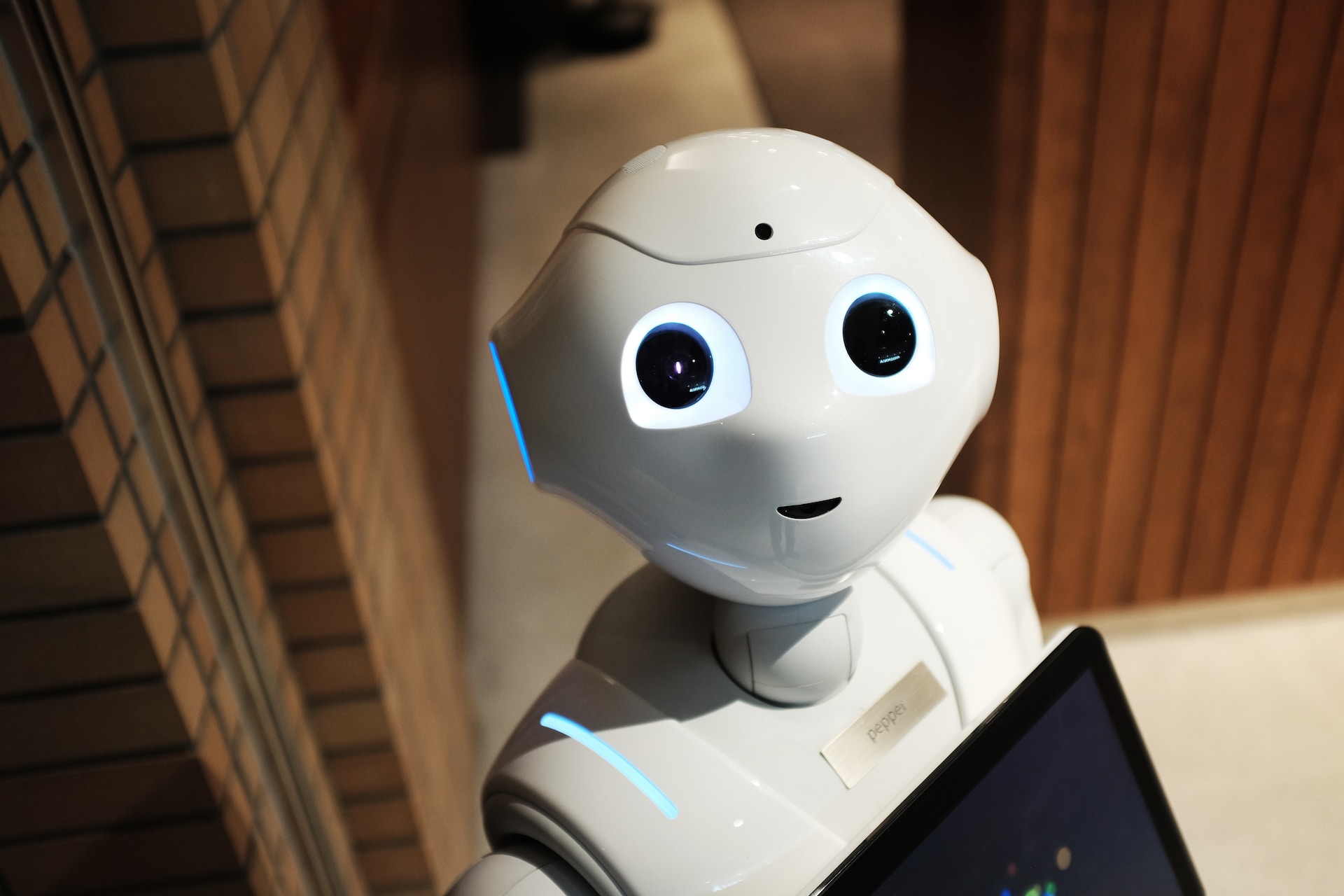
In recent years, robot technology and artificial intelligence have developed at an incredible rate. And while robots used to be just a sci-fi idea, they are now beginning to replace humans in the workplace.

At first glance, this may seem surprising, but as robots become more and more advanced, they are becoming more and more viable as a replacement for humans. For example, robots are already being used to perform such tasks as assembling cars, cleaning rooms, delivering goods, and many others.

On the one hand, this can be beneficial for companies, which can reduce labor costs, reduce the risk of worker injury, and increase efficiency. On the other hand, it can lead to job losses and a worsening economic situation for people who previously worked in these positions.

Of course, there are certain tasks that robots cannot perform as well as humans. For example, robots cannot empathize with customers or provide services that require high skill and intellectual ability. However, as technology improves, robots are becoming increasingly capable, and perhaps sooner or later they will even be able to perform such tasks.

Some experts argue that the use of robots could lead to the creation of new jobs related to their production, programming, and maintenance. However, these new jobs may require higher skills and education than those that have been replaced by robots.

Virtual Reality


In the future, most devices will allow the wearer to enter virtual reality. Some devices allow non-contact control of electronics using brain impulses. Other devices (Google Glass, etc.) offer visualization of the interface in the form of volumetric images and interaction with the simulation of touching its elements. Google Glass, for example, provides quick access to a patient’s medical history.

In addition, it is possible to enter virtual reality with nanorobots. In this case, the human intellect is actually merged with the computer’s intellect. People go through a simple procedure to implant nanorobots (devices the size of a blood cell) into their bodies. When the user wants to experience a simulated reality, the nanorobots immediately go to the right place, suppressing all inputs closest to the real senses and changing them to signals appropriate for the virtual environment. Such nanorobots can be used in a wide range of applications, from business to education, training, health care, engineering, design, media and entertainment.

Tourism has revolutionized because people no longer have to travel long distances or spend large sums of money to see sights and hear sounds-they can enter virtual reality. For this reason, a large number of travel agencies are changing their focus to adapt to the new technology.

Holographic concerts are also taking place using virtual reality technology. The first use of this technology started in the 2000s: in 2005 the band Gorillaz performed in a holographic image at the MTV Europe Music Awards, and in 2010 the Japanese virtual singer Hatsune Miku appeared on stage as a hologram. At the moment, holographic concerts are even more popular than real ones. Every day there are virtual concerts of Michael Jackson, Elvis Presley and other deceased stars.